



Losing a job is one of the most stressful life events, especially when you have no financial cushion. Unexpected job loss can feel like a crisis, but with a structured plan, you can navigate this period and protect your future.
While the situation is urgent, panic is your enemy. Taking immediate, logical steps will help you manage your remaining resources and find new income streams. This guide provides a professional roadmap to surviving a job loss with zero savings.
Key Insights: Quick Action Summary
- Apply for benefits immediately: Unemployment insurance is your first line of defense.
- Audit every penny: Categorize spending into “Survival” vs. “Optional.”
- Negotiate with creditors: Most lenders have hardship programs for those facing job loss.
- Focus on liquid income: Side gigs can provide immediate cash flow while you hunt for a career role.
1. Immediate Financial First Aid
The moment a job loss occurs, your priority shifts from wealth building to capital preservation. You must act within the first 48 hours to secure available resources.
First, file for unemployment benefits through your state’s official labor department website. Delays in filing lead to delays in payments, which you cannot afford without savings.
Next, check your final paycheck details. Ensure you are paid for all hours worked and any accrued vacation time. Every dollar counts when managing a job loss with no safety net.
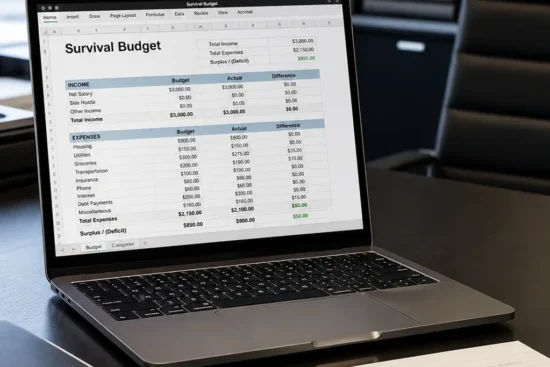
2. The Survival Budget Strategy
Without an emergency fund, your budget must be ruthless. You need to distinguish between “needs” (shelter, basic food, utilities) and “wants” (subscriptions, dining out, entertainment).
| Expense Category | Action Level | Priority |
|---|---|---|
| Rent/Mortgage | High | Essential |
| Basic Groceries | High | Essential |
| Utilities | Medium | Essential |
| Streaming Services | Low | Cut Immediately |
| Dining Out | Low | Cut Immediately |
During a job loss, you should adopt a “zero-based budget” where every remaining dollar is assigned to a survival task.
3. Managing Debt and Bill Payments
Communication is the most powerful tool for someone facing job loss and debt. Do not wait until you miss a payment to call your bank or credit card company.
How to Negotiate with Creditors:
- Call the Hardship Department: Explain your job loss clearly and professionally.
- Request a Deferment: Many major credit card issuers offer 30-to-90-day payment pauses.
- Ask for Interest Rate Reduction: Temporary rate drops can prevent your balance from ballooning while you are unemployed.
- Utility Assistance: Contact your providers to ask about “Low Income Home Energy Assistance Programs” (LIHEAP).
4. Generating Immediate Cash Flow
When you have no savings, you cannot wait months for a corporate hiring cycle. You need “bridge income” to stay afloat after a job loss.
Consider high-frequency gig work such as delivery services, freelance writing, or virtual assistance. These roles often pay weekly, providing the liquidity needed for groceries and gas. For professional freelance opportunities, platforms like Upwork can help bridge the gap.

5. Protecting Your Credit Score
A job loss can devastate your credit if handled poorly. Since future employers and landlords often check credit, maintaining your score is part of your job search.
If you cannot pay the full balance, try to make at least the “minimum payment” to avoid late marks. If that is impossible, ensure you have a documented “Hardship Agreement” with the lender so they don’t report the missed payment as a default.
Pros and Cons of Using Credit During Job Loss
- Pros: Provides immediate liquidity for food; keeps utilities running.
- Cons: High interest rates; potential for a long-term “debt trap”; lowers credit score due to high utilization.
6. Job Search Requirements and Strategy
Surviving job loss requires treating the job hunt like a 9-to-5 role. Optimize your LinkedIn profile and reach out to your network immediately.
- Eligibility Check: Ensure you meet all requirements for local assistance programs.
- Skill Audit: Use free resources like Google Career Certificates to add value to your resume while you are between roles.
- Network: 70% of jobs are found through networking, not online applications.
Conclusion and Next Steps
Surviving a job loss with no savings is a significant challenge, but it is temporary. By cutting non-essential costs, filing for benefits, and communicating with lenders, you can maintain stability.
If you are currently facing job loss, take the first step today: call one creditor or file your unemployment claim. Every small action builds momentum toward your next role.
How are you managing your finances during this transition? Share your tips or questions in the comments below!










Leave a Reply