



When you decide that selling home is the right financial step for you, it is incredibly easy to focus solely on the potential profit. Homeowners often calculate their potential windfall by simply subtracting their remaining mortgage balance from the estimated market value of their property. However, this simplified equation ignores a complex reality. The transactional friction of real estate can significantly erode your net proceeds.
Budgeting for selling home requires a thorough, line-by-line understanding of both mandatory and voluntary expenditures. From real estate agent fees and transfer taxes to home preparation and buyer concessions, the cumulative expenses can catch even experienced sellers off guard.
In this comprehensive guide, we will break down the exact costs associated with selling home, helping you build a realistic, high-accuracy budget so you can walk away from the closing table with no unexpected financial surprises.
Key Insights / Quick Summary
For a fast, high-level overview of what you can expect to pay when selling home, review the summary table below. These estimates are based on typical national averages, though your local market conditions, property tax rates, and negotiable services will ultimately dictate your final balance.
| Cost Category | Estimated Percentage of Sale Price | Average Cost on a $400,000 Home | Type of Expense |
|---|---|---|---|
| Agent Commissions | 5% to 6% | $20,000 to $24,000 | Negotiable / Optional |
| Seller Closing Costs | 1% to 3% | $4,000 to $12,000 | Mandatory Legal & Transfer Fees |
| Home Prep & Repairs | 1% to 2% | $4,000 to $8,000 | Voluntary (Highly Recommended) |
| Seller Concessions | 0% to 2% | $0 to $8,000 | Negotiable (Market Dependent) |
| Moving & Transition | 0.5% to 1.5% | $2,000 to $6,000 | Mandatory Logistics |
| Total Estimated Cost | 7.5% to 14.5% | $30,000 to $58,000 | Excluding mortgage payoff |
Core Recommendation: To safeguard your hard-earned equity, always assume your total transaction costs will hover around 10% of your home’s final sale price. Budgeting for this upper limit prevents cash flow shortages when transitioning to your next property.
The Cold, Hard Reality of Selling Home Fees
Many homeowners mistakenly believe that the buyer bears the brunt of transaction fees. While buyers certainly have their own set of origination and financing expenses, the seller is responsible for the vast majority of settlement costs.
According to an authoritative Experian analysis of home sales costs, a typical seller should prepare to lose between 10% and 15% of their home’s final sale price directly to transaction-related outlays. If your property commands a purchase price of $400,000, you may end up paying anywhere from $40,000 to $60,000 out of pocket or out of your equity before you receive your check.
Understanding these details is not just about avoiding stress; it is about protecting your financial health. When selling home, these expenses are subtracted directly from your home equity at closing. If you have low equity, you might even need to bring cash to the closing table to cover the difference.
1. Real Estate Agent Commissions (The Largest Expense)
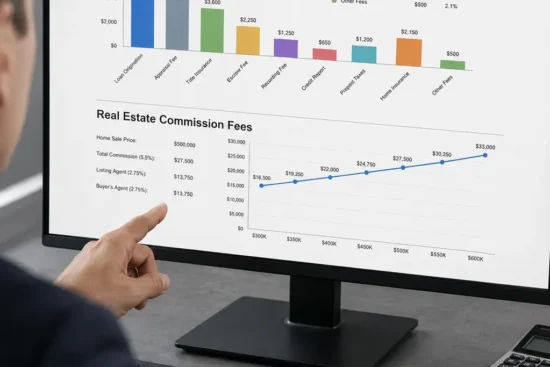
For decades, the standard real estate commission model has represented the single largest cost when selling home. This commission has historically hovered between 5% and 6% of the home’s final sale price. This fee is typically split between the listing agent (the professional representing you) and the buyer’s agent.
Commission Fee = Sale Price × Commission Percentage
On a $400,000 home, a 6% commission translates to a substantial $24,000 deduction from your proceeds.
Understanding Recent Industry Shifts
Recent legal settlements, including those by the National Association of Realtors, have altered how commissions are communicated and structured. While commissions remain fully negotiable, sellers are no longer strictly required to offer a set buyer’s agent commission on the Multiple Listing Service (MLS).
However, many sellers still choose to cover the buyer’s broker fee to make their property more competitive to buyers who may not have the liquid cash to pay their agents out of pocket. When planning your budget, it is safest to allocate the full 5% to 6% for professional representation, while actively discussing your options with your listing agent.
2. Seller Closing Costs: The Breakdown
Beyond agent commissions, sellers are responsible for a suite of legal, administrative, and government fees known collectively as closing costs. These typically range from 1% to 3% of the sale price.
As detailed in Zillow’s comprehensive seller closing cost guide, here are the primary line items you must account for:
Transfer Taxes and Recording Fees
Local and state governments charge transfer taxes to legally document the transfer of real estate title from your name to the buyer. These rates vary wildly. Some states charge a flat fee of a few hundred dollars, while others levy a percentage of the purchase price (often up to 1%). Recording fees are smaller, flat charges paid to the county clerk to update public records.
Owner’s Title Insurance Policy
While the buyer typically pays for a lender’s title insurance policy, it is customary in many markets for the seller to purchase an owner’s title policy for the buyer. This policy protects the new owner against any future claims, liens, or disputes regarding the property’s history. This fee generally ranges between 0.5% and 1% of the purchase price.
Settlement and Escrow Fees
The escrow company, title company, or closing attorney who acts as the neutral third party to handle the funds and paperwork will charge a fee for their services. This is often split 50/50 between the buyer and the seller. Expect your half to cost between $500 and $2,000, depending on the complexity of the transaction.
Prorated Property Taxes and HOA Fees
You are legally responsible for paying property taxes and Homeowners Association (HOA) dues up to the exact day of the sale. Because these bills are often paid in arrears or in advance, the title company will calculate the exact prorated amount you owe and deduct it from your final payout.
Example: If your annual property taxes are $4,800 ($400/month) and you close on April 30th, you will owe $1,600 for the first four months of the year.
Real Estate Attorney Fees
In several states, a real estate attorney is legally required to coordinate the transaction, draft the deed, and oversee the closing. Even in states where an attorney is optional, many sellers hire one to safeguard their interests. Flat fees for basic transaction representation typically range from $800 to $2,000.
3. Preparing and Repairing the Home for the Market
Before you can officially open your doors to prospective buyers, you will likely need to spend money preparing the property. These pre-sale prep steps are voluntary, but they play a critical role in increasing your home’s appeal, helping you secure a higher final sale price.
Estimated Home Prep Budget: 1% to 2% of the asking price
Pre-Listing Inspections
Smart sellers often pay for a professional home inspector to evaluate their property before it goes on the market. This costs roughly $350 to $600. Identifying foundation, roof, plumbing, or electrical issues early allows you to address them on your own terms rather than under the time pressure of an active escrow.
Mandatory and Cosmetic Repairs
Once you discover issues, you must decide whether to fix them or discount your list price. Addressing minor items—such as leaky faucets, peeling paint, outdated light fixtures, or loose deck boards—can prevent buyers from demanding steep credits later.
Professional Staging and Curb Appeal
A beautifully presented home sells faster and for more money. Professional staging, which involves renting high-quality furniture and decor to highlight your home’s layout, can run anywhere from $1,500 to $4,000. Additionally, upgrading your curb appeal with fresh mulch, clean pathways, and colorful flowers can cost several hundred dollars but pays massive visual dividends.
4. Buyer Concessions and Inspection Demands
In a balanced or buyer-favored real estate market, buyers often request “concessions” from the seller. Concessions are financial agreements where the seller pays a portion of the buyer’s closing costs, interest rate buy-downs, or repair credits.
These costs are often negotiated after the buyer performs their formal home inspection. If the inspector finds a malfunctioning HVAC unit or an aging roof, the buyer may ask for a direct credit of several thousand dollars at closing rather than requiring you to fix it beforehand.
This is a critical area where many sellers fail to budget. It is wise to maintain a buffer of 1% to 2% of your home’s value specifically for post-inspection negotiations. If you do not end up needing it, that money remains in your pocket.
5. The Mortgage Payoff and Financial Settlement
The largest deduction from your selling proceeds is almost certainly your outstanding mortgage balance. However, calculating this payoff is not as simple as checking your last monthly statement.
Daily Accruing Interest
Mortgage interest is paid in arrears. This means your monthly payment pays for the interest accrued during the previous month. When you close on a sale, you must pay off your principal balance plus any prorated daily interest that has built up since your last payment.
Requesting a Payoff Statement
To get an accurate number, you must ask your lender for an official “payoff statement,” which details the exact amount required to fully release the lien on a specific closing date.
Prepayment Penalties
While relatively rare on modern, conventional conforming loans, some mortgages contain prepayment penalties if you sell or pay off the loan within the first few years of signing. Review your original loan paperwork carefully or consult your lender to see if this fee applies to you.
6. Moving and Transition Expenses
Once the sale is finalized, you must physically vacate the property. The cost of relocating is a mandatory part of selling home that many people overlook until the very end.
According to moving industry data, a local move for a three-bedroom home costs an average of $1,500 to $2,500. If you are moving across state lines, that cost can easily balloon to $5,000 or even $10,000.
Hidden Transition Expenses to Keep in Mind:
- Short-Term Storage: If your closing dates do not align perfectly, you may need to store your belongings in a secure facility for a few weeks.
- Temporary Housing: Hotel stays, short-term rentals, or staying with family during the transition period.
- Utility Double-Billing: You will need to keep the utilities running at your old home until the day of closing while simultaneously setting up service at your new residence.
Comparative Analysis: Traditional Sale vs. Alternatives
The decisions you make about how to market and sell your property will directly dictate your transaction costs. Let’s compare three common routes for selling home:
Route A: Traditional Listing with a Full-Service Broker
- Pros: Hands-off process, maximum market exposure, professional negotiation, typically yields the highest sale price.
- Cons: Highest fees; you will pay the full 5% to 6% commission.
- Best For: Sellers who want to maximize their sales price and prefer to have a professional handle the complex legal and marketing logistics.
Route B: For Sale By Owner (FSBO)
- Pros: You completely eliminate the listing agent commission (saving 2.5% to 3%).
- Cons: You must handle all marketing, showings, and contract negotiations yourself. You will likely still need to pay a 2.5% to 3% commission to the buyer’s agent.
- Best For: Experienced sellers with extra time who understand real estate contracts and feel confident pricing and marketing their own property.
Route C: Selling to an iBuyer or Cash Investor
- Pros: Instant offer, flexible closing date, no showings, no staging costs, buy “as-is” with no repair demands.
- Cons: Lower purchase price; iBuyers charge transaction fees that can range from 5% to 13%, and cash investors typically buy at a steep discount.
- Best For: Sellers facing a tight timeline, financial hardship, or those who want to avoid the stress of putting a home on the market at all costs.
Step-by-Step Worksheet: Estimating Your Net Proceeds
To calculate exactly what you will walk away with after selling home, use this simplified formula and fill out the estimated values below:
Net Proceeds = Final Sale Price – Total Transaction Expenses – Mortgage Payoff
Follow these steps to calculate your financial outcome:
- Estimate Your Listing Price: Consult local comps to find a realistic market value.
- Deduct Agent Commissions: Multiply your sales price by the agreed commission percentage (typically 0.05 to 0.06).
- Deduct Seller Closing Costs: Estimate 2% of your sales price for taxes, title, and escrow fees.
- Deduct Preparation Costs: Total up your pre-listing repairs, staging, and inspection expenses.
- Deduct a Negotiation Buffer: Set aside 1.5% of the price for buyer concessions.
- Subtract Your Mortgage Payoff: Enter your total principal balance plus accrued interest.
- Calculate Your Net Proceeds: This final figure represents your actual profit or the cash you can put toward your next down payment.
For highly detailed calculators and state-specific closing rules, refer to Bankrate’s home selling expense breakdown, which offers an interactive tool to estimate these numbers dynamically based on your ZIP code.
Expert Strategies to Minimize Your Costs
While many of the expenses of selling home are mandatory, you do have options to keep more of your equity. Consider these expert strategies:
- Negotiate the Listing Agent’s Commission: If your home is in pristine condition or you plan to buy your next home with the same agent, ask for a reduced listing fee.
- Shop Around for Settlement Services: You do not have to use the title company or closing attorney your agent suggests. Compare rates from multiple local providers to find the best deal.
- Perform DIY Minor Repairs: Instead of hiring a handyman at $75/hour, handle basic painting, landscaping, and simple fixture swaps yourself.
- Limit Your Credits: If a buyer requests extensive credits, offer to fix only the structural, health, and safety issues, leaving minor cosmetic updates to them.
Frequently Asked Questions
Do sellers pay closing costs when selling home?
Yes, sellers are responsible for a variety of closing costs, which typically range from 1% to 3% of the home’s final sales price. These costs include title insurance, transfer taxes, recording fees, escrow fees, and real estate attorney fees.
Who pays the real estate agent commissions?
Historically, the seller has paid the real estate agent commission, which is split between their listing agent and the buyer’s agent. Under current guidelines, commission terms are highly negotiable and must be clearly outlined in your listing agreement.
How are property taxes handled at closing?
Property taxes are prorated up to the exact closing date. The seller pays property taxes for the days they owned the home during the current tax billing cycle, and this amount is deducted from their proceeds at closing to credit the buyer.
Can I sell my house “as-is” to avoid repair costs?
Yes, you can list your house “as-is.” This indicates that you will not perform or pay for any repairs. However, “as-is” properties often attract lower offers and cash buyers who expect a discount for taking on the home’s physical problems.
How much should I budget for moving?
A local move generally costs between $1,000 and $3,000, while long-distance moves can easily range from $4,000 to over $10,000. It is best to get multiple professional moving quotes at least six weeks before your expected closing date.
Is the profit from selling home taxable?
You may be subject to capital gains taxes if your net profit exceeds $250,000 for single taxpayers or $500,000 for married couples filing jointly. To qualify for this exclusion, you must have lived in the home as your primary residence for at least two of the last five years.
Conclusion & Next Steps
When selling home, knowledge is your greatest financial asset. By proactively planning for commissions, taxes, title fees, and prep work, you can avoid the closing-day panic that catches unprepared sellers off guard.
Now that you understand the true scope of these expenses, your immediate next step is to obtain a detailed net sheet from a qualified real estate professional or title agent. This will give you a clear, localized breakdown of your expected proceeds, allowing you to confidently plan your next real estate journey.








Leave a Reply